How to Identify Your Most Fertile Days
A clear, evidence-based introduction to recognising ovulation and understanding when pregnancy is most likely. Learn how to identify your fertile window accurately using your body’s real biological signs — not guesswork.
If You’re Trying to Get Pregnant, Timing Matters
If you’ve started trying for a baby, you’ve probably realised something quickly:
No one really explains how ovulation works.
You may have been told:
“Track your cycle.”
“Use an app.”
“Try every other day.”
But if you’re feeling unsure or quietly anxious, that advice can feel vague.
When is pregnancy actually possible?
Pregnancy can only occur in the few days before ovulation and the day of ovulation itself. Outside of that window, conception is not biologically possible.
That’s why identifying ovulation matters.
Not predicting it.
Not estimating it.
Identifying it.
Your body gives you measurable signs every cycle. This guide introduces you to them clearly and practically.

What Does It Mean to Identify Your Fertile Days?
Your “fertile window” is not the middle of your cycle.
It is not automatically day 14.
And it is not determined by an app algorithm.
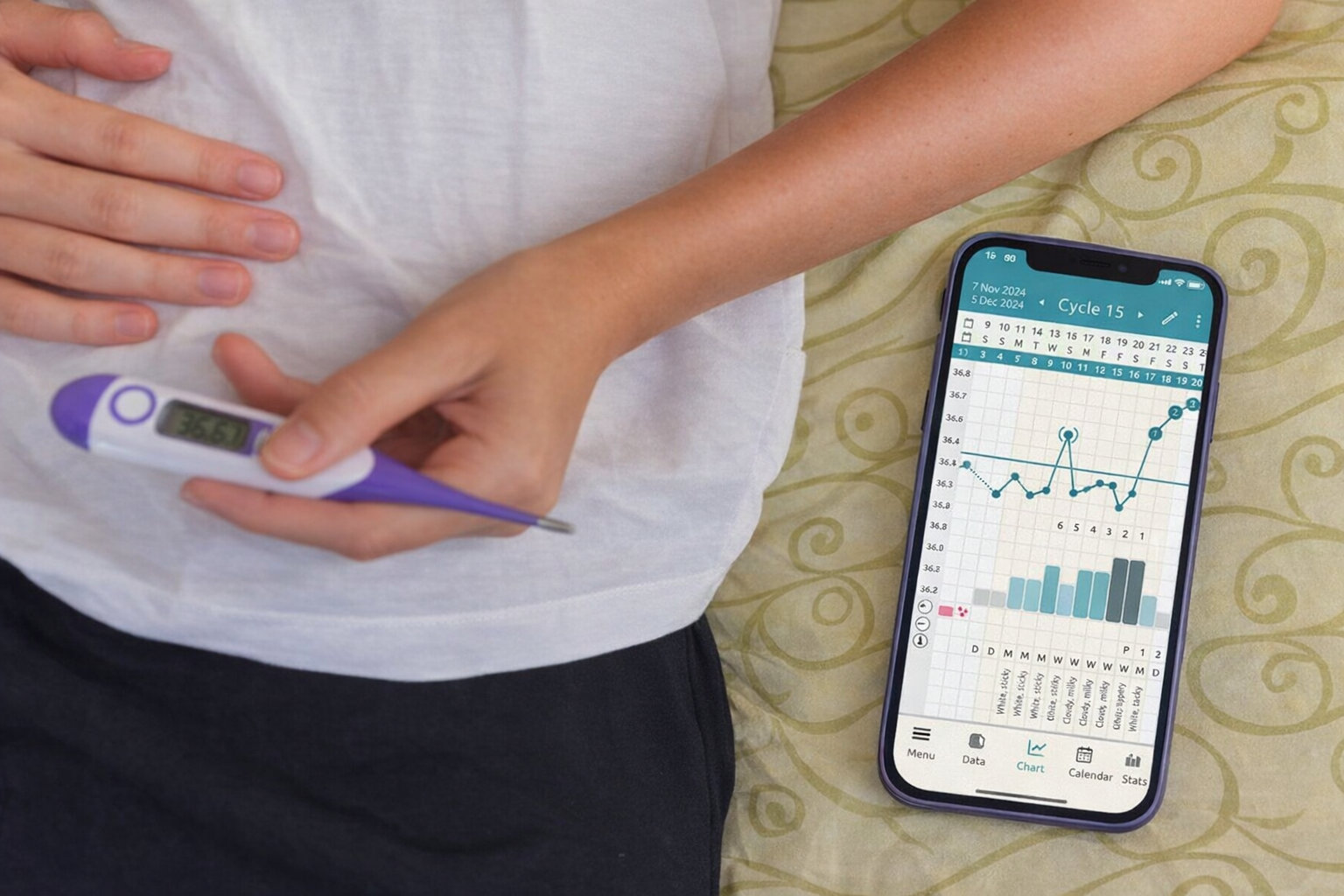
Your most fertile days are identified by observing:
• Changes in cervical mucus
• Shifts in basal body temperature
• Patterns across your cycle
These signs tell you when ovulation is approaching and when it has occurred.
The fertility awareness method — specifically the symptothermal method — uses these biological markers together to define your fertile window accurately.
This guide explains how.
What This Guide Teaches About Ovulation and Conception
How to Identify Your Most Fertile Days is a structured introduction to understanding ovulation using real biomarkers.
Inside, you will learn:
• What ovulation is and why it matters for conception
• When pregnancy is biologically possible
• How to recognise fertile cervical mucus
• How basal body temperature confirms ovulation
• How these signs work together to define your fertile window
• Why timing intercourse relative to ovulation matters
This is not about obsessively tracking.
It is about knowing what to look for.
When you understand your fertile signs, the process becomes clearer and calmer.

What You’ll Be Able To Do After Reading
After reading this guide, you will:
• Understand when ovulation is approaching
• Recognise your most fertile days
• Know when ovulation has already occurred
• Time intercourse with greater confidence
• Feel less dependent on predictions and more grounded in your own cycle
Instead of wondering whether you “missed it,” you’ll know what your body is doing.
Who This Fertile Window Guide Is For
This guide is for you if:
• You are actively trying to conceive
• You’ve been trying for a few months and feel unsure about timing
• You are coming off hormonal contraception and want clarity
• You want evidence-based information, not vague advice
• You prefer structured understanding over internet overwhelm
• You want to feel calmer and more confident about your cycle
It is foundational knowledge.
Clear. Practical. Responsible.
About the Instructor
I’m Lisa Sherratt, a certified fertility awareness instructor trained in the symptothermal method.
I trained with NFTPA UK in 2020, serve on their management committee, and tutor new instructors internationally.
I teach women how to understand ovulation, track their cycles accurately, and use the fertility awareness method responsibly for natural contraception or conception.
This is clinical knowledge delivered clearly.
Frequently Asked Questions About Identifying Fertile Days
How many days each cycle am I fertile?
Pregnancy is possible only in the days leading up to ovulation and the day of ovulation itself. Whilst sperm can survive for several days in fertile cervical mucus. There is only a 10-14 hour window after ovulation for the egg to be fertilised.
Does a positive ovulation test confirm ovulation?
Ovulation tests detect a hormone surge, but they do not confirm that ovulation has occurred. Basal body temperature confirms ovulation retrospectively.
Is this guide suitable if I’ve recently stopped hormonal contraception?
Yes. Understanding fertile signs can be particularly helpful when your cycle is re-establishing itself after hormonal birth control.
Does this replace medical advice?
No. This guide provides foundational education about ovulation and fertile signs. If you have concerns about cycle irregularity or difficulty conceiving, medical support may be appropriate.
Buy the Guide
Instant digital download
Beginner-friendly
Evidence-based
Designed as a clear foundation for identifying your most fertile days
£19